Sánchez turns a failed tenant-protection vote into a test of his parliamentary mandate
The Nov. 29 vote brings Spain’s election forward by as much as nine months, turning a defeat on tenant protections into a test of the government’s ability to govern.
 By
Derek Olsen
By
Derek Olsen
Spanish Prime Minister Pedro Sánchez called a snap general election on Monday for Nov. 29 after parliament rejected housing measures proposed by his minority government.
The decision moves Spain’s national vote forward substantially. The election otherwise had to be held by August 2027, according to France 24, meaning voters will go to the polls as much as nine months earlier than required.
The timing connects two pressures that Sánchez can no longer manage separately. His government has encountered a parliamentary barrier to passing housing protections, while large demonstrations have made affordability a prominent political demand outside the legislature. Calling an election transfers that conflict to voters, but it does not guarantee that Sánchez will receive the broader mandate he is seeking.
“To do more, we need to renew and broaden the support of the people,” Sánchez said in a televised address.
The immediate issue is therefore larger than one unsuccessful legislative proposal. Spain’s minority government depends on support beyond its governing parties to pass measures through parliament. The housing vote showed that this support could no longer be assembled even on an issue generating substantial public pressure.
A housing defeat exposed the government’s parliamentary weakness
The rejected package would have provided specific protections for renters. Its measures included automatic renewal of tenancy contracts and restrictions on evictions involving vulnerable tenants, as reported by RFI.
Those provisions did not survive parliament. Opposition parties voted against the government’s proposals, turning housing from a difficult policy problem into evidence of the administration’s limited capacity to legislate. The defeat matters politically because a minority government can remain in office while still lacking dependable votes for its program. Sánchez’s election decision is an attempt to change that parliamentary arithmetic through a new public mandate.
The vote also revealed a decisive break with Junts. The Catalan separatist party opposed the housing bills even though its support is crucial to the government. That distinction is central to understanding why Sánchez opted for an early election: the government did not merely lose a vote to its established opposition, but failed to retain backing from a party it relies upon to enact legislation.

The defeat does not establish what the measures would have done to rents, housing availability or the overall number of evictions. It establishes something narrower but immediately consequential for Spanish politics: the government could not pass its proposed tenant protections through the current parliament.
Street protests intensified pressure over affordability
The parliamentary confrontation unfolded alongside demonstrations in Madrid and other Spanish cities. Tens of thousands of people took part, demanding more affordable housing or government action on housing costs. That mobilization made the legislative failure more politically damaging than an isolated defeat inside parliament.
The sequence was compressed. Parliament rejected the proposals on Friday, demonstrators marched on Saturday, and Sánchez announced the Nov. 29 election on Monday. The proximity of those events placed housing at the center of the election decision, even though the eventual campaign may address a wider range of issues.
LBC reported that Sánchez announced the early vote in a televised address three days after opposition parties defeated the legislation. His stated objective is a larger progressive majority capable of advancing the government’s agenda. Voters will now decide whether the housing dispute strengthens that appeal or reinforces the opposition’s argument for a change in government.
The demonstrations and the parliamentary vote exert different kinds of pressure. Protesters demonstrated the intensity of public concern, but they do not constitute a parliamentary majority. The legislative defeat showed that urgency outside parliament had not translated into enough votes within it. The snap election is Sánchez’s chosen mechanism for trying to reconcile those two realities.
The election carries substantial risk for the Socialists
An early vote gives Sánchez an opportunity to seek a clearer mandate, but the available polling does not place his Socialist Party in front. Recent opinion polls have generally shown the conservative Popular Party ahead of the Socialists. The campaign consequently begins with the prime minister trying to reverse an opposition advantage rather than protect a polling lead.
Housing offers Sánchez a defined political argument. His government proposed protections, parliament blocked them, and he is asking voters for more support. Yet Junts’ opposition demonstrates that the dispute cannot be reduced to a conventional contest between the left and right. The government’s broader parliamentary arrangement also broke down on the bills.
That makes Junts relevant beyond this single vote. Its decision showed the limits of Sánchez’s governing coalition and support network at the moment he needed votes for a high-profile response to public pressure. The election will determine the next composition of parliament, but the polling cited in current reports cannot establish what majority, if any, will emerge on Nov. 29.
Spain’s vote is part of a broader pattern in Global Politics where fragmented parliaments make alliances consequential, although the parties and electoral circumstances differ by country. In Spain, the immediate calculation is specific: Sánchez has surrendered the remaining months of the parliamentary term to seek an electorate strong enough to overcome the legislative weakness exposed by the housing defeat.
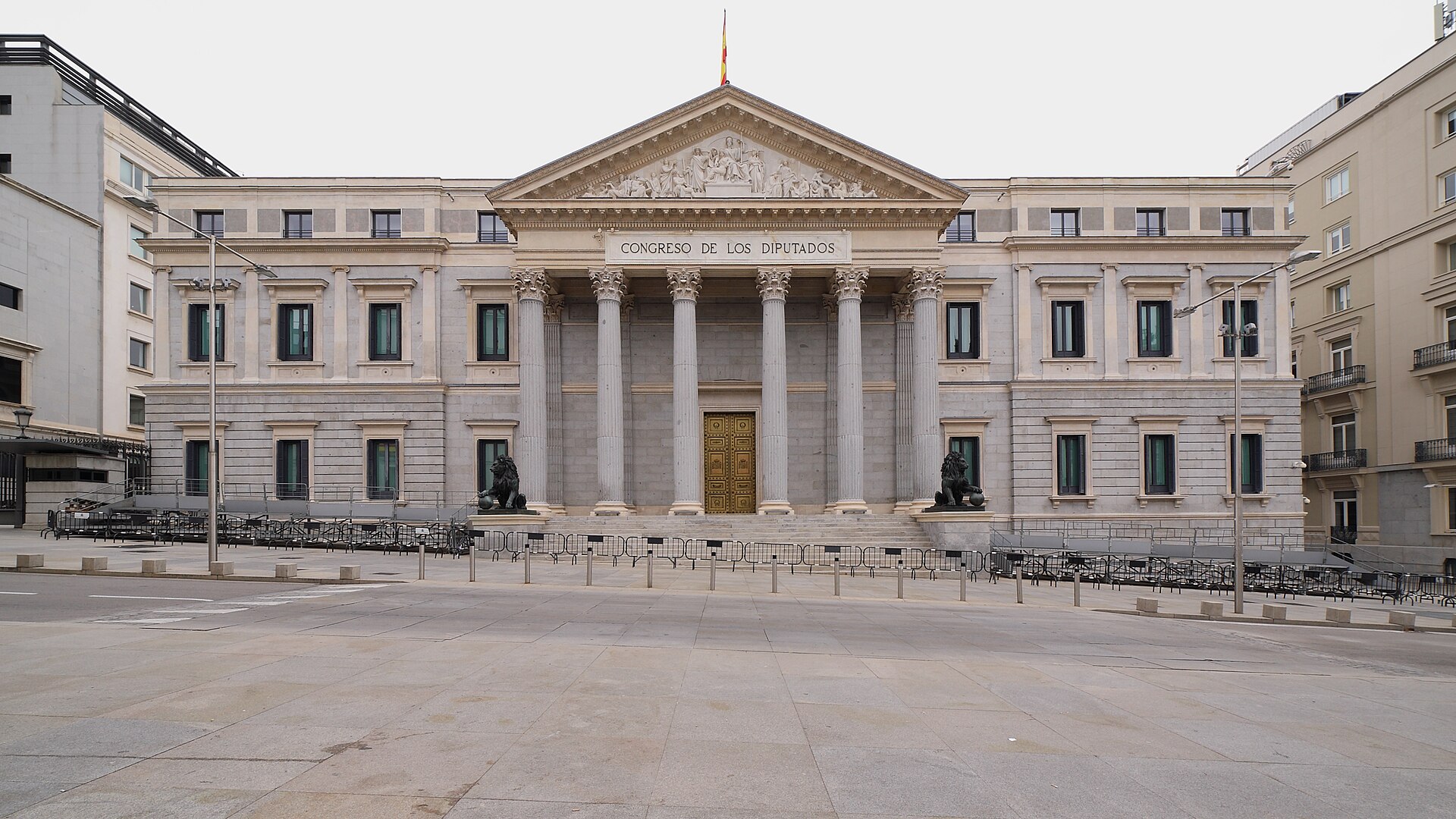
Featured image. Source: Wikimedia Commons. Credit: Javier Perez Montes. License: CC BY-SA 4.0.