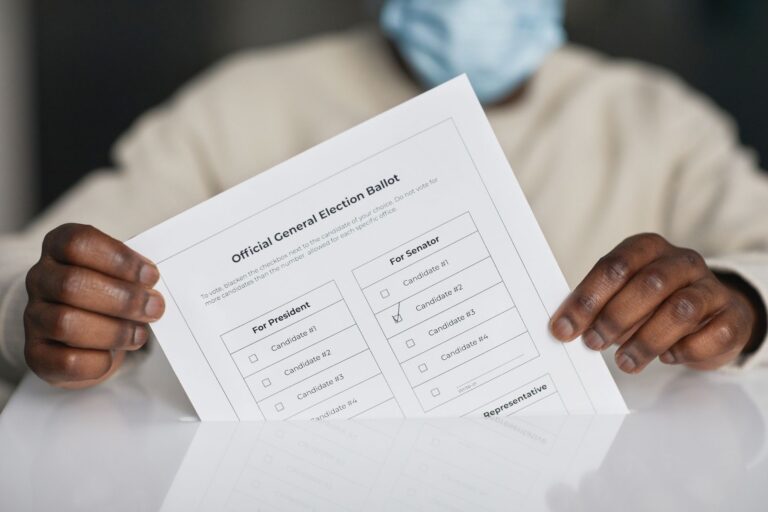
Michigan House Opens Review of Elections Bureau After Ballot Petition Deadlock
Michigan House lawmakers have formed a select committee to consider policy changes at the Bureau of Elections and Board of State Canvassers after a voter ID ballot proposal stalled over petition signatures.
 By
Derek Olsen
By
Derek Olsen
The Michigan House of Representatives is forming a select committee to consider potential policy changes involving the state Bureau of Elections and Board of State Canvassers. The move follows a deadlocked canvassing-board vote that prevented a proposed constitutional amendment concerning voter identification and proof of citizenship from advancing toward the November ballot.
In brief
- The Michigan House has created a select committee focused on potential policy changes at two state election bodies.
- The panel follows a split Board of State Canvassers vote that halted a proposed voter ID and citizenship ballot amendment.
- The seven-member committee can issue subpoenas and call witnesses to testify under oath.
The dispute centered on the signatures submitted with the petition drive, not on a finding that the election agencies had acted improperly. It has nevertheless placed the procedures used to review ballot petitions at the center of a new legislative inquiry, with lawmakers given authority to seek records and hear testimony.
A petition review led to a ballot-access dispute
The proposed amendment would have tightened Michigan voter identification rules and required proof of citizenship for voter registration. Its path to the ballot depended on whether enough petition signatures could be counted after state review.
Americans for Citizen Voting Michigan submitted the petition signatures for the measure. Nonpartisan Bureau of Elections staff reviewed a sample of signatures and processed challenges to some of them. After that review, the campaign appeared to fall below the threshold needed to qualify for the ballot.
The campaign later presented the Board of State Canvassers with additional evidence that it said supported accepting more signatures from the sample. Counting those signatures, the group argued, would have allowed the proposal to meet the required threshold. Details of the dispute, including the role of the signature sample and the additional filings, were reported by WCMU.

A split board vote halted the proposal
The four-member Board of State Canvassers split evenly on whether to accept the additional filings. Two Republican members voted to accept them, while two Democratic members voted against doing so because some materials had been submitted after a deadline.
That tie left the petition campaign unable to proceed. The vote did not settle the competing views of the additional evidence offered by the campaign. Instead, it left the proposal without the board action needed to move it toward the November ballot.
The deadlock illustrates the importance of procedural decisions in ballot-petition review. Signature sampling, challenges and filing deadlines can all shape whether a proposed measure reaches voters, even when a campaign has submitted a large number of signatures. The board’s handling of the additional filings became the immediate issue that prompted House Republicans to seek further examination.
The House committee will examine election-policy questions
The new select committee is intended to consider policy changes at the Bureau of Elections and the Board of State Canvassers. Those bodies play distinct roles in the petition process: Bureau staff conduct reviews, while the canvassing board makes decisions that affect whether ballot measures can advance.

Reporting from Michigan Public describes the committee as a response to the stalled petition drive and the disagreement over which signatures should count. Its creation brings a legislative forum to questions raised by the review process, including how signature challenges and late-submitted materials are handled.
The committee will have seven members, with five Republicans and two Democrats. It can issue subpoenas and call people to testify under oath. Those powers allow the panel to request documents and take sworn testimony as it considers the circumstances surrounding the petition review and possible policy changes.
What the committee’s formation means now
The House action creates an avenue for lawmakers to scrutinize the procedures involved in this petition dispute. It does not itself change Michigan election rules or alter the Board of State Canvassers’ vote on the proposed amendment.
The measure at issue sought to change voter identification and citizenship requirements, making its petition process a matter of broader public interest in Michigan’s Elections system. For now, the confirmed development is the Legislature’s decision to establish a committee with formal investigative powers after the board’s deadlock stopped the ballot proposal from advancing.
The committee’s future work will determine what testimony it hears, what records it seeks and whether it recommends any policy changes. Its formation reflects a dispute over the administration of a specific ballot petition, while leaving the underlying outcome of that petition unchanged.
Featured image. Source: Pexels. Credit: Soran Ali. License: Pexels License.